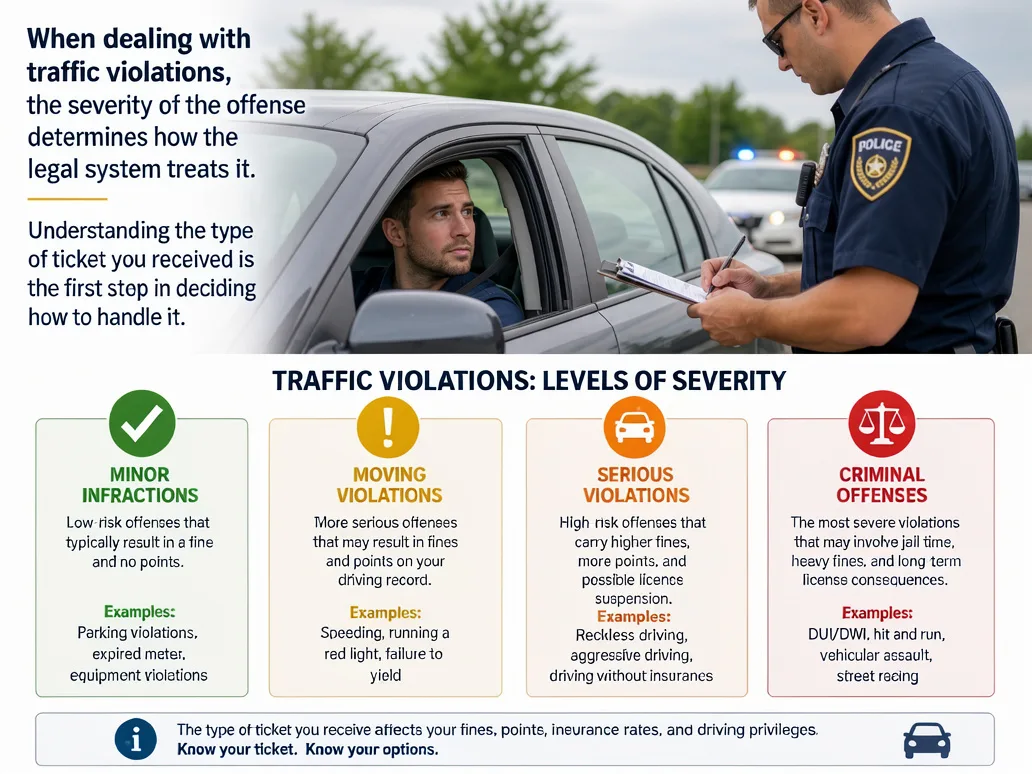
When dealing with traffic violations, the severity of the offense determines how the legal system treats it. Understanding the type of ticket you received is the first step in deciding how to handle it.
Types of Traffic Tickets
Traffic violations generally fall into three distinct categories based on their severity and the legal procedures involved:
1. Infractions (Civil Violations)
These are the most common types of traffic tickets. They are non-criminal offenses that typically result in fines, fee penalties, and points on your driving record, but no jail time.
Examples: Speeding (minor), running a red light or stop sign, improper lane changes, distracted driving (e.g., texting while driving), and expired registration or fix-it tickets (e.g., a broken taillight).
2. Misdemeanors (Criminal Offenses)
Unlike infractions, traffic misdemeanors are actual criminal charges. If convicted, these go on your criminal record and can result in significant fines, probation, driver's license suspension, and potential jail time.
Examples: Driving Under the Influence (DUI/DWI), reckless driving, driving with a suspended or revoked license, street racing, and hit-and-run incidents resulting only in property damage.
3. Felonies (Severe Criminal Offenses)
These are the most serious traffic violations and are strictly handled in criminal court. Conviction carries mandatory prison time, massive fines, permanent criminal records, and long-term revocation of driving privileges.
Examples: Repeat DUI offenses, vehicular manslaughter or homicide, fleeing and eluding law enforcement, and hit-and-run accidents that result in severe injury or death.
Who Do I Find to Represent Me in Traffic Court?
Please visit TICKET FIXER and CALL PERSONAL INJURY on their YouTube channel and website of the same name. It’s a great start!
Depending on the ticket, you will need to look for specific types of legal representation:
For Infractions: Traffic Ticket Attorneys
If you are facing a standard speeding ticket or moving violation and want to avoid points on your license (which spike insurance rates), you should hire a specialized Traffic Ticket Lawyer or Traffic Court Attorney.
What they do: They know local traffic court procedures, often negotiate to reduce moving violations to non-moving violations (which don't carry points), or attempt to get the ticket dismissed entirely based on technicalities.
Cost: They usually charge a flat, affordable fee per ticket.
For Misdemeanors & Felonies: Criminal Defense Attorneys
If your ticket involves a DUI, reckless driving, or any charge where jail time is a possibility, a standard traffic ticket lawyer is not enough. You need a Criminal Defense Attorney—specifically one who specializes in DUI or traffic crimes.
What they do: They handle full criminal defense, suppress unlawful evidence (like faulty breathalyzer tests), negotiate plea bargains, and represent you in front of a criminal court judge or jury.
How to Find the Right Lawyer
If you decide to seek representation, here are the most effective ways to find a qualified attorney:
Local Bar Association: Most county or state bar associations have a free lawyer referral service that can match you with a vetted traffic or criminal defense attorney in your specific jurisdiction.
Specialized Legal Directories: Websites like Avvo, Martindale-Hubbell, or Justia allow you to search for lawyers by location and specialty, complete with peer reviews and client ratings.
Word of Mouth: Ask friends, family, or even a lawyer you’ve used for a different matter (like estate planning or family law) for a trusted referral.
A Quick Tip: Many traffic ticket lawyers offer a free initial consultation. Before hiring one, always ask about their success rate in that specific local court and confirm whether their fee covers all court appearances on your beh